2026 vs 2008: Is a Market Crash Coming?
With rising rates, affordability at historic lows, and investor anxiety building — is 2026 the next 2008? We break down the parallels, the differences, and what smart investors should do right now.
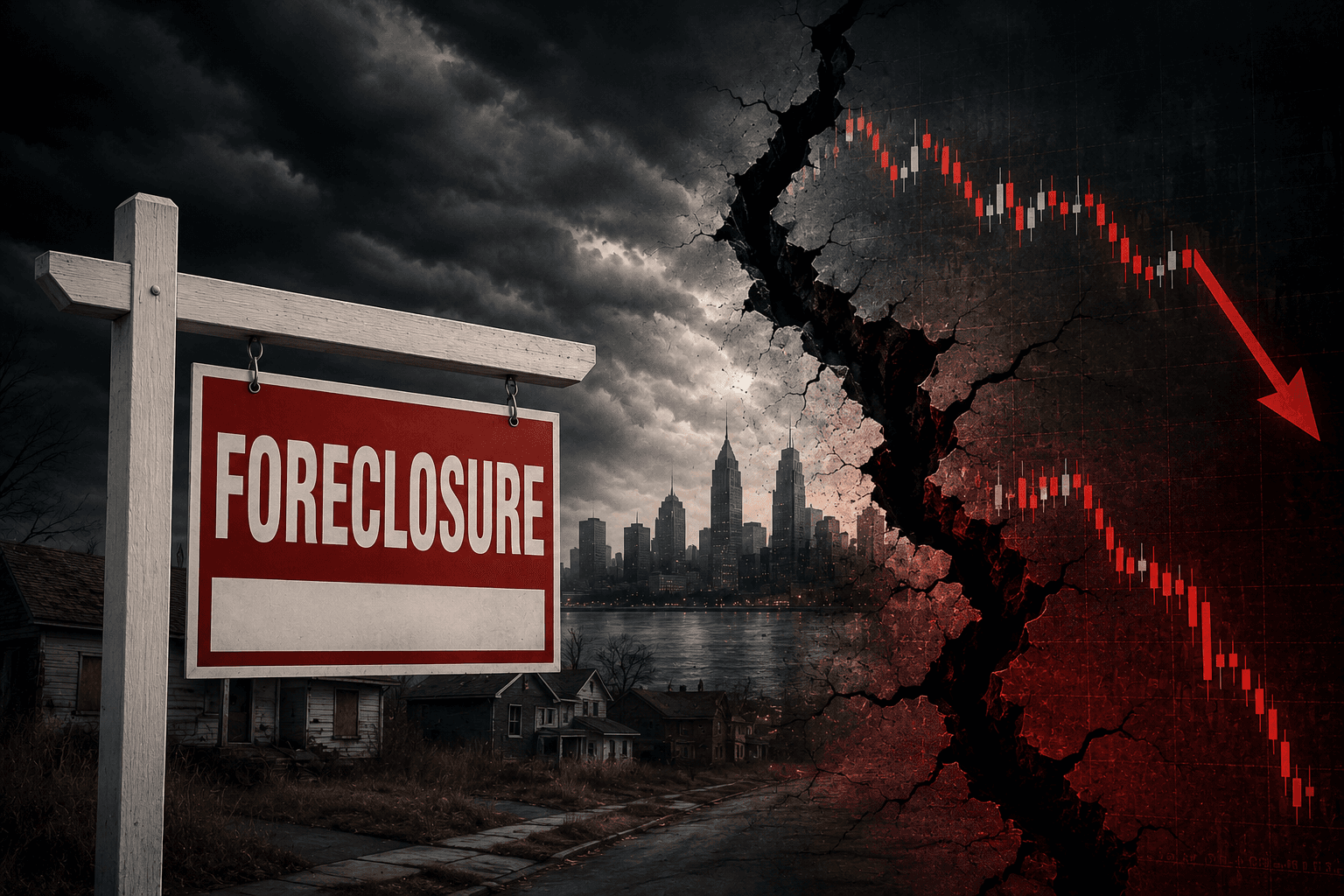
It's the question on every real estate investor's mind: are we headed for another 2008?
Headlines scream about unaffordable housing, stubborn interest rates, and a slowing economy. If you were investing (or trying to buy) during the Great Recession, the current environment might feel eerily familiar.
But before you panic-sell your portfolio, let's look at the data — because the similarities are real, but so are the critical differences.
The Parallels: Why 2026 Feels Like 2008
Affordability Is at Historic Lows
In 2008, the average home price had ballooned beyond what most Americans could afford. In 2026, we're in a similar place — but for different reasons. Prices haven't crashed; they've plateaued at elevated levels while mortgage rates hover between 6.5% and 7.5%.
The monthly payment on a median-priced home today is roughly 40% higher than it was in 2021. For first-time buyers, the math simply doesn't work in most markets.
Inventory Is Shifting
After years of historically low inventory, we're finally seeing supply tick up. In some Sun Belt markets — Phoenix, Austin, Tampa — inventory has surged past pre-pandemic levels. Sellers are sitting longer. Price cuts are becoming common.
This was a hallmark of early 2007: the market didn't crash overnight. It slowly turned, then accelerated.
Consumer Debt Is Rising
Credit card debt has crossed $1.2 trillion. Auto loan delinquencies are climbing. Student loan payments resumed. The American consumer is stretched — and consumer stress historically precedes housing corrections.
Investor Sentiment Has Shifted
The "buy anything with a pulse" mentality of 2021-2022 is gone. Cap rates have compressed, cash flow is harder to find, and many investors are sitting on the sidelines waiting for a correction.
The Critical Differences: Why 2026 Is NOT 2008
Lending Standards Are Dramatically Tighter
This is the single biggest difference. In 2006-2007, anyone with a heartbeat could get a mortgage — no income verification, no down payment, adjustable rates that would explode in two years.
Today's borrowers have been underwritten to much higher standards. The average credit score on new mortgages is above 730. Debt-to-income ratios are scrutinized. NINJA loans don't exist anymore.
The 2008 crash was fundamentally a credit crisis. Bad loans defaulted en masse, securities tied to those loans collapsed, and banks failed. That structural risk simply isn't present today.
Homeowner Equity Is at Record Highs
In 2008, millions of homeowners were underwater — they owed more than their homes were worth. Today, American homeowners are sitting on over $32 trillion in equity. Even if prices drop 10-15%, the vast majority of homeowners remain above water.
This means far fewer forced sellers, which puts a floor under prices that didn't exist in 2008.
Supply Is Still Structurally Low
Yes, inventory is rising in some markets. But nationally, we're still short an estimated 4-5 million housing units. The construction industry never fully recovered from 2008 — we've been underbuilding for 15 years.
This chronic undersupply is a fundamentally different backdrop than 2006, when builders were overproducing spec homes in every subdivision.
The Labor Market Is Holding
Unemployment in 2008 spiked to 10%. In mid-2026, it's hovering around 4.2%. People with jobs pay their mortgages. Until we see significant job losses, mass foreclosures are unlikely.
What Does This Mean for Investors?
The Opportunity Is in the Uncertainty
Most investors are frozen right now — and that's exactly when opportunities emerge. If you're disciplined about the numbers, this market rewards you:
- Cash flow is king. Stop chasing appreciation. Run every deal through an LTR or STR analysis and only buy properties that cash flow from day one.
- DSCR matters more than ever. With rates elevated, your debt service coverage ratio tells you whether a deal actually works. Target 1.25 or higher.
- Negotiate hard. Sellers are more flexible than they've been in years. Days on market are up. Price cuts are real. Use that leverage.
Markets to Watch
Not every market is created equal. Look for:
- Population growth + job growth — markets where people are moving for employment, not just lifestyle
- Landlord-friendly regulations — states with clear eviction processes and no rent control
- Rent-to-price ratios above 0.7% — the 1% rule is aspirational in most markets, but anything below 0.7% is a warning sign
Protect Your Downside
- Maintain cash reserves. At least 6 months of expenses per property. If a correction comes, you want to be a buyer, not a forced seller.
- Lock in fixed-rate debt. Do not take adjustable-rate loans betting on rate cuts. We learned this lesson in 2008.
- Diversify across markets. If your entire portfolio is in one metro area, you're taking concentration risk.
The Bottom Line
Is 2026 exactly like 2008? No. The structural conditions that caused the Great Recession — toxic lending, overleveraged consumers, fraudulent securities — are not present today.
But is the market risk-free? Also no. We're in a period of elevated prices, high rates, and economic uncertainty. Some markets will correct. Some investors will get burned.
The difference between 2008 and 2026 is that today's risks are manageable if you do the math. Run the numbers. Stress-test your assumptions. Buy for cash flow, not hope.
The investors who thrive in uncertain markets are the ones with discipline, data, and a long-term perspective. The tools exist to analyze any deal in seconds — use them.
Pacific Rentals Pro gives you instant access to LTR and STR analysis on 140M+ properties. Run the numbers before you make a move. Start your free analysis →
Keep Learning
- Understanding Cap Rates for Investors — why cap rate compression in 2026 matters for your buying decisions.
- How to Calculate Cash on Cash Return — the best metric for comparing deals in any market cycle.
- Compare cap rates across US rental markets →