Why Denver's Housing Market Stalled in 2026 — a Local Landlord's Read
Denver home sales fell ~17% while listings sit and sellers pull out. A local landlord on the rate lock-in, migration slowdown, and delistings behind the stall.

My neighbor spent most of this summer finishing his walkout basement. It had been left unfinished when the house was built, and he did it right — a new bedroom, a nicely finished bathroom, and a great room with a wet bar — so he could finally list and move up. He put the sign in the yard, and the showings came. There was real interest.
And then, one by one, the same sentence: "We love it — but we have to sell our house first."
A few months later, the sign quietly came down. His home never sold. He didn't drop the price into oblivion or take a bad offer — he just gave up trying, for now, and pulled the listing.
Denver is my home market — I've lived here since 1995. I've watched this city grow up: through the dot-com bust in 2001, the housing crash in 2008, and the long boom in between and after, when Colorado became one of the first states in the country to legalize recreational marijuana — the first to open retail sales, back in 2014 — and people poured in from all over. Three decades of that, and I've seen Denver run hot and I've seen it fall. I've never seen it behave quite like it is right now. It isn't crashing — prices are basically flat. It's stuck. And once you line up the data, my neighbor's story stops being an anecdote and starts looking like the whole market in one driveway.
The stall, by the numbers
Here's the Denver metro picture from the most recent report, August 2026, from the Denver Metro Association of Realtors (DMAR):
| Metric (Denver metro, Aug 2026) | Figure | Year-over-year |
|---|---|---|
| Closed sales | 3,068 | down ~17% |
| Active listings (month-end) | ~13,080 | roughly flat |
| Median close price | $594,495 | ~flat (−0.25%) |
| New listings | 4,892 | up ~4% |
| Median days in MLS | 27 | up from ~21 in July |
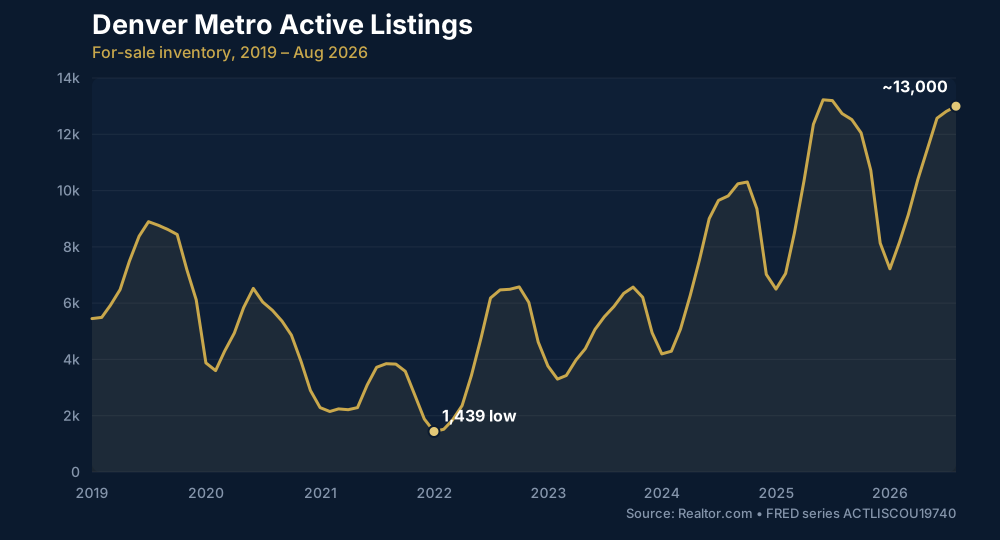
Look at the shape of it. Homes are still coming to market (new listings up), and inventory is holding near 13,000 — but sales fell off a cliff, down about 17% from a year ago and nearly 19% from July alone. Supply is fine; it's transactions that have dried up. DMAR pegged the overall market at roughly 18 weeks of inventory — the most balanced Denver has felt in years.
You can see the whole swing in one line — from a record-tight 1,439 active listings in early 2022 back up to about 13,000 today:
Two more signs the market has lost its urgency:
- About half of active listings have cut their price. Realtor.com data shows 6,544 Denver-area listings with a price reduction against roughly 13,000 active — call it one in two.
- Sellers are pulling out. Realtor.com ranked Denver #2 in the nation for delistings in mid-2026, and the Colorado Sun reported withdrawn homes rising to about 3.2% of active listings with relistings up roughly 26% year over year. That's my neighbor, multiplied by thousands.
Prices flat, sales down, inventory sitting, sellers giving up. So what froze the machine? Two forces — one pulling buyers away, one nailing sellers to the floor.
Fewer people are moving to Colorado
For a decade, Denver's story was simple: everybody wanted in. That has changed, and the official numbers are stark.
For the year ending July 2025, Colorado recorded net domestic out-migration of about 12,100 people — its first domestic net loss since 2004 (Census Bureau / Colorado State Demography Office). Statewide population still ticked up +0.4%, but that was the slowest growth since 1989, and it came almost entirely from births and international arrivals — not from people relocating here from other states.
Closer to home it's sharper:
- Denver County actually lost residents (about −903), its first net loss since 2021, with Arapahoe (−1,884) and Jefferson (−1,225) also shrinking; Douglas County was the outlier that grew.
- Metro Denver's net migration is down roughly 66–70% from a decade ago, per Common Sense Institute's read of the Census data.
The private movers' data is mixed — United Van Lines had Colorado running heavily outbound in 2025, while U-Haul's truck-traffic index still showed a slight net gain — so I won't overstate it. But the direction is clear: the flood of new buyers that used to soak up every listing has slowed to a trickle. Fewer arrivals means fewer people to buy my neighbor's house.
The golden handcuffs: rate lock-in
Here's the force I think matters most, and it's the one that explains why every one of my neighbor's buyers had to sell first.
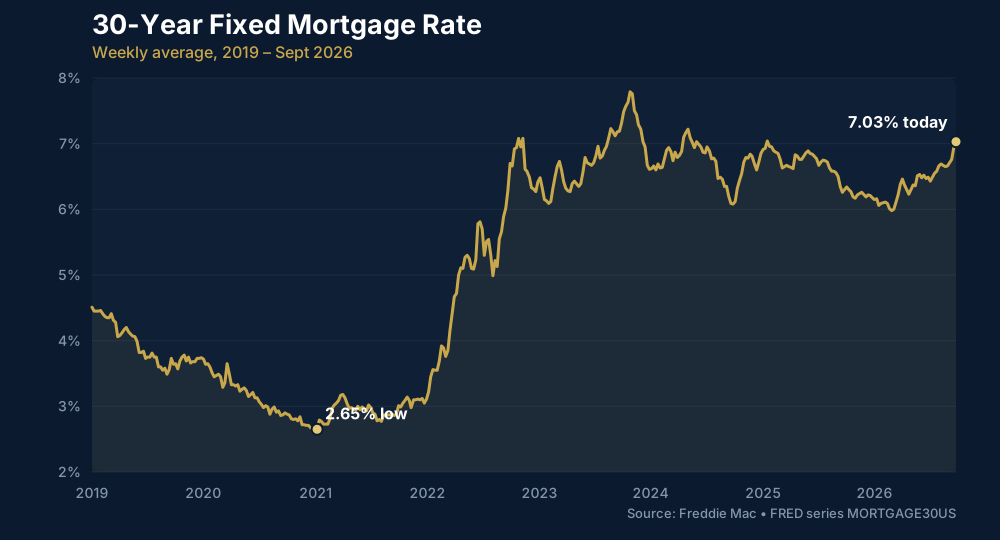
As of late September 2026, the 30-year fixed mortgage averaged 7.03% (Freddie Mac). Five years ago it bottomed at 2.65% — this is the whipsaw every would-be seller is staring at:
Now look at what existing owners are sitting on. Per the FHFA's National Mortgage Database (Q1 2026):
- ~49.9% of U.S. mortgages carry a rate below 4%.
- ~66.7% are below 5%.
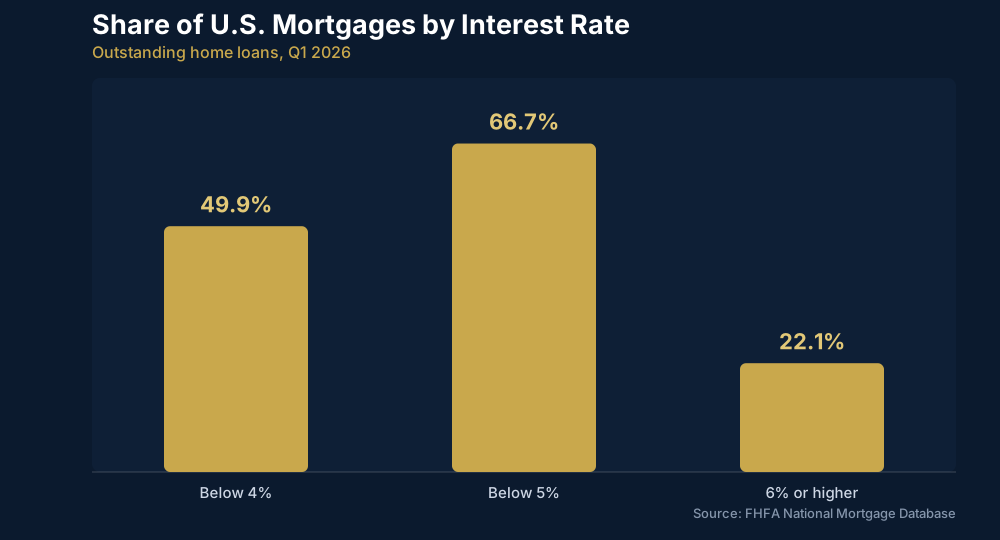
Half the country locked in cheap money during the pandemic. To move now, they'd give it up. Run the math on a $400,000 loan:
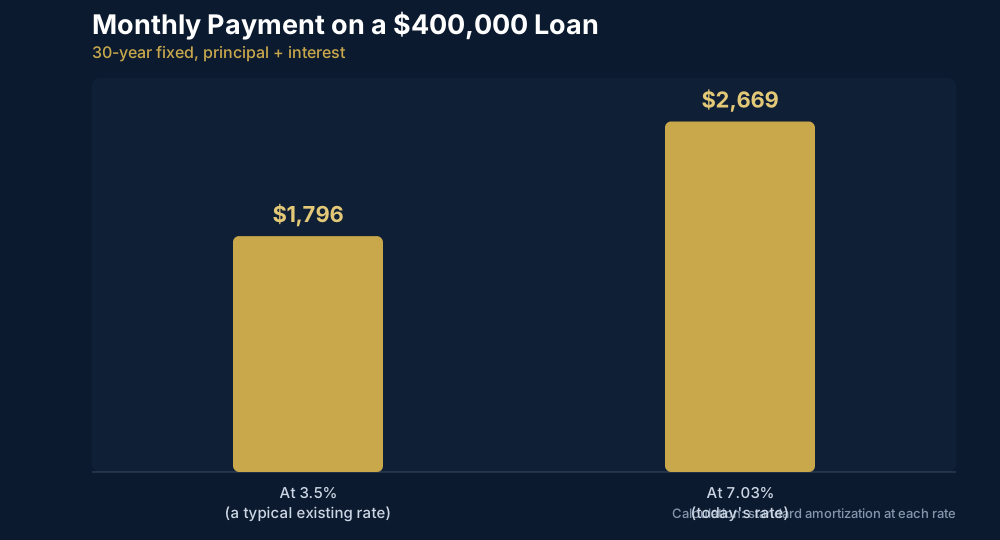
That's about $873 more every month — roughly 49% higher — for the same size loan. Over $10,000 a year, just for the privilege of moving. Most people won't do it unless they're forced to.
This isn't just intuition; it's measured. The FHFA's own research ("The Lock-In Effect of Rising Mortgage Rates," WP 24-03) found that for every 1 percentage point that current rates sit above a homeowner's original rate, that owner is about 18% less likely to sell — and estimated the lock-in prevented roughly 1.33 million home sales between mid-2022 and the end of 2023. I dug into the rate side of this in my piece on the 2026 mortgage crisis.
Why this specific combination freezes everything
Put the two forces together and you get my neighbor's driveway:
- Owners with sub-4% loans don't list — moving doubles their rate.
- That starves the market of the "move-up" homes buyers want.
- The buyers who do shop are mostly move-up owners themselves — so their offer is contingent on selling their own house first.
- But the person who'd buy their house is in the same trap. The chain has no first link.
- So contingent deals collapse, showings lead nowhere, and sellers delist and wait.
It's a market where supply exists and buyers exist, but they can't reach each other because almost everyone is standing on a cheap mortgage they refuse to give up. That's not a crash — it's a standoff. And it's the same dynamic I wrote about in why home sales are falling in 2026, playing out in my own zip code.
What it means if you invest or rent out property in Denver
I don't share this to be gloomy — a stalled market is a different market, not a dead one, and standoffs create openings:
- Negotiating leverage is back. When half of active listings have already cut price and Denver ranks #2 for delistings, sellers who need to transact are motivated. Delisted and expired listings are a quiet source of deals — those owners already proved they want out.
- Rental demand tends to firm up. Every would-be buyer who can't make the move-up math work stays a renter longer. That's supportive for holding rentals, even as for-sale prices go soft.
- If you already own at a low rate — think hard before you sell. Your sub-4% loan is an asset. In many cases the smarter play is to keep the property as a rental and borrow against equity rather than surrender the rate.
- But underwrite conservatively. With money at 7%+ and prices flat-to-soft, thin deals don't pencil. Run every property on real numbers — purchase price, realistic rent, and cash flow — before you commit. That's exactly what our free rental analysis calculator is for.
My neighbor's basement is beautiful, and his house will sell eventually — probably when rates ease enough to unlock the chain above him, or when he decides to rent it out and stop waiting on a buyer who's stuck. Until then, Denver stays in this odd holding pattern: plenty of homes, plenty of people, and a market that can't quite close the deal.
If you own here, the low rate in your pocket is worth more than it feels like. And if you're looking to buy, this is the most patient, best-informed buyer's market Denver has offered in a long time — for the investor who runs the numbers before the emotions.