Home Sales Are Cratering — Why That's Good News for Landlords
August existing-home sales hit their second-worst level since 1999 — while rents keep climbing. Here's what that divergence means for rental investors.
The August existing-home sales report was ugly. Sales ran at about a 3.98 million annualized pace — down roughly 3.5% from a year ago and 9.5% from July on a non-seasonally-adjusted basis. That makes it the second-weakest August since 1999, behind only the depths of 2010. Months of supply climbed to about 4.9, the highest reading in a year.
If you only read the homebuyer headlines, that sounds like bad news for real estate. For rental property investors, the picture is more interesting — because at the same time sales are cratering, rents are still rising. Understanding why those two things are moving in opposite directions is the whole game.
What the numbers actually say
Here's the August 2026 snapshot, side by side:
| Metric | Latest | Trend |
|---|---|---|
| Existing-home sales (annualized) | ~3.98M | 2nd-worst August since 1999 |
| Sales, year over year | ~ -3.5% | Falling |
| Median sales price, YoY | ~ +1.6% | Barely positive |
| Months of supply | ~4.9 | Highest in 12 months |
| Rent of primary residence (CPI), YoY | ~ +2.9% | Still rising, every month |
| Rental vacancy rate | ~7.3% | Ticking up slightly |
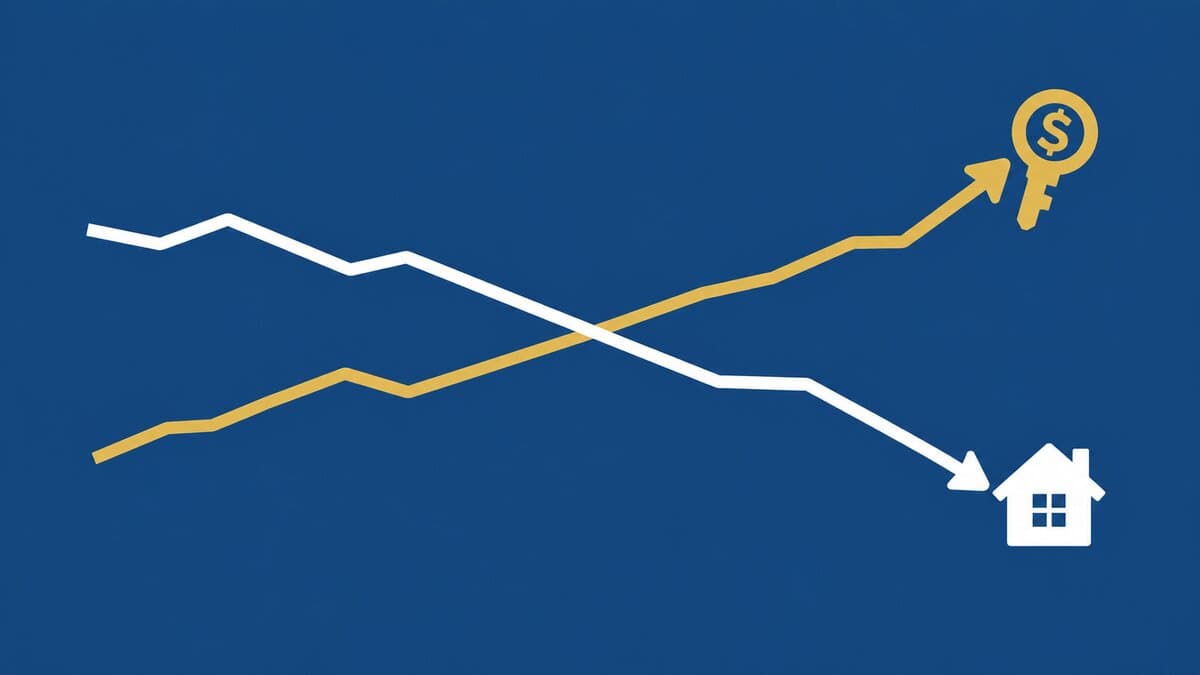
Two lines are diverging: sales down, rents up. That divergence is the story.
Why sales are falling — and why it matters
Sales aren't collapsing because demand for housing disappeared. They're collapsing because buying a home is unaffordable and existing owners won't move. Mortgage rates near 7% have done two things at once:
- Priced out buyers. At today's rates, the monthly payment on a median-priced home is out of reach for a large share of would-be first-time buyers.
- Locked in owners. The majority of homeowners hold mortgages well below 4%. Selling means giving up that rate and re-borrowing at 7%, so they simply stay put. That chokes off inventory and transactions.
The result is a market with historically low turnover — but the underlying need for a place to live is unchanged. When people can't buy, they rent. That demand flows straight into the rental market.
This is the key distinction to keep in mind: a sales slump driven by affordability and lock-in (today) is very different from one driven by recession and job loss (2008). In the first case, frustrated buyers become renters and rents hold firm. In the second, households double up, form fewer new households, and rents soften along with everything else. Right now, with the labor market broadly intact, we're in the first case — which is why the rent data looks the way it does.
The rent side of the ledger
Rents are the quiet winner here. The CPI measure of rent of primary residence was up about 2.9% year over year through mid-2026, and it has risen every single month over the prior six months. Rent doesn't crash when home sales do — in an affordability-driven slump, it does the opposite.
Two honest caveats keep this from being a fairy tale:
- Growth is decelerating. Up ~2.9% is firm, but it's a long way from the 8%-plus rent spikes of 2022–2023. The era of double-digit rent hikes is over; think steady, not spectacular.
- Supply is loosening a little. The rental vacancy rate has drifted up to around 7.3%. A wave of multifamily completions is adding units in some Sun Belt metros, which caps how aggressive landlords can be on new leases. (We covered where that supply is concentrated in Sun Belt vs. Midwest rental markets.)
So the accurate headline isn't "rents are exploding." It's "rents are holding up while the for-sale market seizes." For a rental investor, holding firm through a housing slowdown is exactly what you want your income to do.
What this means for rental investors
A frozen sales market is not a reason to sit out — it's a setup that quietly favors buyers and landlords:
- Less competition to buy. With sales at multi-decade lows and supply at a one-year high, the casual and speculative buyers are frozen out. Serious investors face fewer bidding wars, longer days on market, and real negotiating room.
- Rental demand has a tailwind. Every locked-out buyer is a potential tenant. The same forces suppressing sales are supporting your rent roll.
- Financing is workable if you underwrite it honestly. This is the discipline that separates deals that survive from deals that don't: run every property at today's rate. If it cash-flows at ~7%, you own an asset that works now and gets better if rates fall. If it only works on the assumption of a refinance, you're speculating, not investing.
We walked through the broader lender shakeup and the "run it at today's rate" logic in the 2026 mortgage industry breakdown, and how today's market differs from the last big downturn in 2026's market vs. 2008.
The bottom line
August's home-sales miss is a genuinely weak number — one of the worst in 25 years. But weak sales and weak rentals are not the same thing, and in an affordability-driven freeze they pull apart. Buyers are stuck; that demand is renting; and rents are holding firm even as the for-sale market stalls.
For investors, the move is the same one that's worked all cycle: analyze real deals at real rates, and let a firm rental market do the heavy lifting. Run the numbers on a property and see whether it cash-flows today — because in this market, the deals that pencil at 7% are the ones worth owning.
Figures reflect August 2026 existing-home-sales data (National Association of Realtors) and CPI rent-of-primary-residence and rental-vacancy data (U.S. Bureau of Labor Statistics / Census, via FRED). This is general market commentary, not investment advice — always run your own numbers.